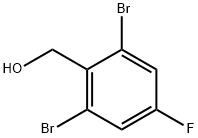
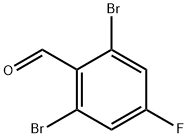
The general procedure for synthesizing 2,6-dibromo-4-fluorobenzaldehyde from 2,6-dibromo-4-fluorobenzenemethanol was as follows: in Example 101b, 2,6-dibromo-4-fluorobenzaldehyde (20 g, 71 mmol) was dissolved in ethanol (500 mL) and NaBH4 (10 g, 284 mmol) was added. The reaction mixture was stirred at room temperature (~10 °C) for 4 h. The progress of the reaction was monitored by thin layer chromatography (TLC) to confirm complete consumption of the raw materials. Upon completion of the reaction, the reaction was quenched with 1 M HCl solution (150 mL). Subsequently, most of the ethanol was evaporated under reduced pressure. The residue was extracted with ethyl acetate (3 x 500 mL) and the organic layers were combined and dried with anhydrous Na2SO4. After drying, the organic solvent was evaporated under vacuum. Finally, the residue was purified by silica gel column chromatography (eluent was petroleum ether/ethyl acetate in a gradient from 50:1 to 20:1) to afford the target product 2,6-dibromo-4-fluorobenzenemethanol (15 g, 75% yield) as a white solid.