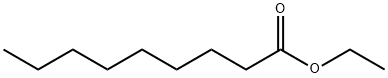
Chemical Properties
clear colorless liquid
Chemical Properties
Ethyl nonanoate has a slightly fatty, oily, nutty, fruity, odor reminiscent of cognac with a rosy-fruity note.
Occurrence
Reported found in pineapple, banana, plum, apple, Parmesan cheese, milk, beer, cognac, rum, whiskey, grape
wines, plum and pear brandy, wheaten bread, beef and corn oil, grape, plum and elderberry.
Definition
ChEBI: A fatty acid ethyl ester of nonanoic acid.
Preparation
By distillation of pelargonic acid and ethyl alcohol in toluene in the presence of small amounts of muriatic acid (HCl);
also by hydrogenation of oenanthylidene acetate in the presence of Ni at 180°C.
Aroma threshold values
Detection: 12 ppm
Taste threshold values
Taste characteristics at 5.0 ppm: fruity, estry, green, waxy and fatty with banana and tropical nuances.
General Description
Ethyl nonanoate is separated and quantified from cachaca, rum and whisky by direct injection gas chromatography spectrometry. It is used as the internal standard to monitor the solid-phase micro-extraction fibre extraction integrity and efficiency.
Synthesis
General procedure for the synthesis of ethyl nonanoate from nonanal and ethanol: To a 10 mL reaction vessel was added tetrakis(triphenylphosphine)palladium (Pd(PPh3)4, 6 mg, 1 mol%), nonanal (0.5 mmol), potassium carbonate (K2CO3, 207 mg, 1.5 mmol), benzyl chloride (70 μL, 0.6 mmol) and ethanol (EtOH, 1 mL). . The vessel was sealed and the reaction was carried out at 90°C for 30 min using microwave radiation with an initial power of 30 W. (The microwave reaction was carried out using a CEM Discover 300 W single-mode microwave reactor. The reaction was carried out in a special glass tube equipped with a self-sealing spacer and the pressure was controlled by an appropriate sensor at the top of the vessel. (Temperature is monitored by a non-contact infrared sensor located below the bottom plate of the chamber). Upon completion of the reaction, the mixture was cooled to room temperature, filtered through a Celite pad and washed with ethanol (5 mL). The filtrate was concentrated under vacuum and the product was purified by rapid chromatography on silica gel (eluent was a solvent mixture of dichloromethane/hexane).
References
[1] Tetrahedron Letters, 2011, vol. 52, # 41, p. 5319 - 5322
[2] Synthetic Communications, 2011, vol. 41, # 8, p. 1247 - 1250
[3] Chemistry Letters, 2004, vol. 33, # 7, p. 834 - 835