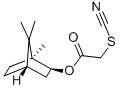
Chemical Properties
Yellow oily liquid; terpene-like odor. Very soluble in alcohol, benzene, chloroform, and ether; practically insoluble in water.
Combustible.
Uses
Insecticide, especially in cattle sprays.
Hazard
Toxic by ingestion, strong irritant.
Originator
Bornate,Wyeth,US,1946
Production Methods
Isobornyl thiocyanoacetate is synthesised through a two-step process starting with camphene, a bicyclic monoterpene. First, camphene is reacted with chloroacetic acid at elevated temperatures for 16 hours, producing isobornyl monochloroacetate. This intermediate is then dissolved in ethyl alcohol, and potassium thiocyanate is added. The mixture is refluxed for approximately 8 hours, during which the chlorine atom is substituted by a thiocyanate group, yielding isobornyl thiocyanoacetate.
Manufacturing Process
200 g of camphene and 150 g of chloroacetic acid were heated 16 hours at
125°C, cooled to room temperature and the resulting product washed with
water. In this way, 177 g of isobornyl monochloroacetate, analyzing 12.8%, by
weight, chlorine was recovered. 174 g of the isobornyl monochloroacetate was
dissolved in 300 cc of ethyl alcohol, 100 g of potassium thiocyanate added to
this solution and the mixture refluxed for a period of 8 hours. 276 g of a
product was recovered, which analyzed as follows: chlorine, 0.2% by wt. and
sulfur, 10.9% by wt. This analysis shows the product to be principally
isobornyl thiocyanoacetate.
Therapeutic Function
Pediculicide
Pesticide Type
Insecticide; Veterinary substance