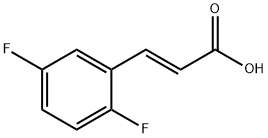
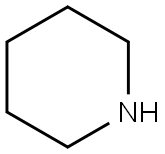
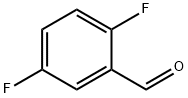
The general procedure for the synthesis of trans-2,5-difluorocinnamic acid from hexahydropyridine and 2,5-difluorobenzaldehyde is as follows:
1. piperidine (2 mL, 20.2 mmol) and pyridine (50 mL) were added to a mixture of 2,5-difluorobenzaldehyde (12.07 g, 85.0 mmol) and malonic acid (18.28 g, 175.6 mmol) under stirring conditions.
2. The reaction mixture was heated to reflux (oil bath temperature 100 °C) under nitrogen protection and maintained for 2 hours. Effervescence was observed during the reaction for about 90 minutes, initially intense then gradually diminishing.
3. Upon completion of the reaction, the mixture was cooled to 20-25 °C and slowly poured into a stirred 2 M hydrochloric acid solution (310 mL) and the pH was adjusted to 1. The reaction was carried out at 20-25 °C.
4. After aging the precipitate for 1 hour at 20-25°C, it was filtered. The filter cake was washed with distilled water (2 x 50 mL) and subsequently dried for 1 hour.
5. The dried solid product was dissolved in tert-butyl methyl ether (TBME, 250 mL) to separate the organic and aqueous phases. The aqueous phase was extracted once more with TBME (100 mL).
6. The organic phases were combined, dried with magnesium sulfate (25 g), filtered and concentrated by rotary evaporator to give the white solid product trans-2,5-difluorocinnamic acid (13.4 g, 85.7% yield).