111-77-3

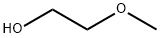
Name 2-(2-Methoxyethoxy)ethanol
CAS 111-77-3
EINECS(EC#) 203-906-6
Molecular Formula C5H12O3
MDL Number MFCD00002871
Molecular Weight 120.15
MOL File 111-77-3.mol

Chemical Properties

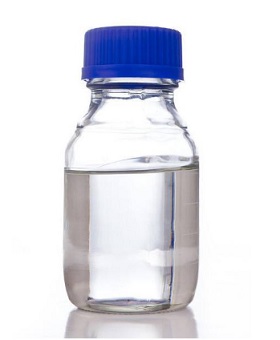
Appearance liquid
Melting point  −70 °C(lit.)
Boiling point  194 °C(lit.)
density  1.023 g/mL at 25 °C(lit.)
vapor density  4.14 (vs air)
vapor pressure  0.2 mm Hg ( 20 °C)
refractive index  n20/D 1.426
Fp  183 °F
storage temp.  Store below +30°C.
form  Liquid
pka 14.37±0.10(Predicted)
color  Clear
Odor Faint pleasant odor
PH 4-7 (200g/l, H2O, 20℃)
Stability: Stable. Incompatible with strong oxidizing agents. Hygroscopic. Store under nitrogen.
explosive limit 1.38-22.7%
Water Solubility  Miscible
Specific Heat Capacity Cp(liquid):271.1J/(g·K),at 25℃
Thermal Conductivity 0.19 W/(m·K) at 25 ℃
Sensitive  Hygroscopic
Merck  14,6037
BRN  1697812
Henry's Law Constant 6.2×10⁵ mol/(m3Pa) at 25℃, HSDB (2015)
Exposure limits EU LTEL: 10 ppm(50.1 mg/m3)
Cosmetics Ingredients Functions SOLVENT
PERFUMING
FRAGRANCE
VISCOSITY CONTROLLING
InChI 1S/C5H12O3/c1-7-4-5-8-3-2-6/h6H,2-5H2,1H3
InChIKey SBASXUCJHJRPEV-UHFFFAOYSA-N
SMILES COCCOCCO
LogP -0.47 at 20℃
CAS DataBase Reference 111-77-3(CAS DataBase Reference)
NIST Chemistry Reference Ethanol, 2-(2-methoxyethoxy)-(111-77-3)
EPA Substance Registry System 111-77-3(EPA Substance)

Safety Data

Symbol(GHS)  Health Hazard (GHS08)
GHS08
Signal word  Warning
Hazard statements  H361d
Precautionary statements  P201-P202-P280-P308+P313-P405-P501
Hazard Codes  Xn
Risk Statements 
R63:Possible risk of harm to the unborn child.
Safety Statements 
S36/37:Wear suitable protective clothing and gloves .
WGK Germany  1
RTECS  KL6125000
Autoignition Temperature 221 °C
TSCA  Yes
REACH Registrations Active
HS Code  29094200
Storage Class 6.1C - Combustible acute toxic Cat.3
toxic compounds or compounds which causing chronic effects
Hazard Classifications Repr. 1B
Safety Profile
Moderately toxic by skin contact and intraperitoneal routes. Mildly toxic by ingestion. An experimental teratogen. Other experimental reproductive effects. An eye irritant. Combustible when exposed to heat or flame; can react with oxidzing materials. Reacts violently with Ca(OCl)2, chlorosulfonic acid, and oleum. To fight fire, use dry chemical, alcohol foam, water spray or mist, CO2. When heated to decomposition it emits acrid smoke and irritating fumes. See also GLYCOL ETHERS.
Hazardous Substances Data 111-77-3(Hazardous Substances Data)
Toxicity
LD50 orally in rats: 9.21 g/kg (Smyth)

Hazard Information

Material Safety Data Sheet(MSDS)

Supplier