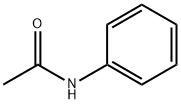
General Description
White to gray solid.
Reactivity Profile
ACETANILIDE(103-84-4) is an amide. Flammable gases are formed by the reaction of organic amides with strong reducing agents. Amides are very weak bases (weaker than water). Imides are less basic yet and in fact react with strong bases to form salts. That is, they can react as acids. Mixing amides with dehydrating agents such as P2O5 or SOCl2 generates the corresponding nitrile. The combustion of these compounds generates mixed oxides of nitrogen (NOx).
Air & Water Reactions
This compound is sensitive to prolonged exposure to air . Water insoluble.
Potential Exposure
This amide compound is used in rubber industry as accelerator, in plastics industry as cellulose ester stabilizer, in pharmaceutical manufacture, stabilizer for hydrogen peroxide, azo dye manufacture
Fire Hazard
This chemical is combustible.
First aid
Move victim to fresh air. Call 911 or emergency medical service. Give artificial respiration if victim is not breathing. Do not use mouth-to-mouth method if victim ingested or inhaled the substance; give artificial respiration with the aid of a pocket mask equipped with a oneway valve or other proper respiratory medical device. Administer oxygen if breathing is difficult. Remove and isolate contaminated clothing and shoes. In the case of contact with substance, immediately flush skin or eyes with running water for at least 20 minutes. For minor skin contact, avoid spreading material on unaffected skin. Keep victim warm and quiet. Effects of exposure (inhalation, ingestion, or skin contact) to substance may be delayed. Ensure that medical personnel are aware of the material(s) involved and take precautions to protect themselves. Medical observation is recommended for 24 to 48 hours after breathing overexposure, as pulmonary edema may bedelayed. As first aid for pulmonary edema, a doctor or authorized paramedic may consider administering a drug or other inhalation therapy.
Shipping
UN2811 Toxic solids, organic, n.o.s., Hazard Class: 6.1; Labels: 6.1-Poisonous materials, Technical Name Required.
Incompatibilities
Dust may form explosive mixture with air. Incompatible with oxidizers (chlorates, nitrates, peroxides, permanganates, perchlorates, chlorine, bromine, fluorine, etc.); contact may cause fires or explosions. Keep away from alkaline materials, strong bases, strong acids, oxoacids, epoxides, alkyl nitrates, alkalis (liberate aniline), chloral hydrate, phenols, ferric salts
Chemical Properties
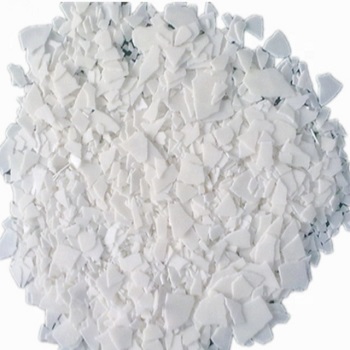
Acetanilide orthorhombic plates or scales; or white, shining, crystalline solid or powder. Odorless
Chemical Properties
Acetanilide, also known as Nphenylacetamide, acetanil, or acetanilide is a white to gray solid with molecular formula CH3CONHC6H5. It is an odorless colorless, glossy, crystalline powder or flakes. Acetanilide was the first aniline derivative found to possess analgesic as well as antipyretic properties and was quickly introduced into medical practice (Weast, 1981; Gnanasambandan et al., 2014). Later, it was established that in the human body it is mostly metabolized to paracetamol, this compound being responsible for the analgesic and antipyretic properties of acetanilide (Bertolini et al., 2006; Gnanasambandan et al., 2014). In addition, it was discovered that it has unacceptable toxic effects, so that acetanilide is no longer used as a drug.
Acetanilide is mainly used as an intermediates in the synthesis of pharmaceuticals and dyes, as an additive for hydrogen peroxide and cellulose ester varnishes, and as a plasticizer in polymer industry as well as accelerator in the rubber industry.
Waste Disposal
Add to flammable solvents (alcohol or benzene) and incinerate. Oxides of nitrogenmay be scrubbed from combustion gases with alkaline solution
Physical properties
White glossy flake crystal or white crystalline powder. Slightly soluble in cold water, soluble in hot water, methanol, ethanol, ether, chloroform, acetone, glycerol and benzene.
History
The department of internal medicine at the University of Strassburg in the 1880s was noted for its investigations into intestinal worms. Adolf Kussmaul, the director, asked two young assistants, Arnold Cahn and Paul Hepp, to treat patients with naphthalene as it had been used elsewhere as an internal antiseptic. The young doctors were disappointed with the initial results, but Hepp persevered with the naphthalene treatment in a patient suffering from a variety of complaints besides worms. Surprisingly, the fever chart revealed a pronounced antipyretic effect from this treatment. This had not been observed before, but further investigation revealed that Hepp had wrongly been supplied by Kopp’s Pharmacy in Strassburg with acetanilide instead of naphthalene! Cahn and Hepp lost no time in publishing a report on their discovery of a new antipyretic.
For many years after its discovery in 1886, Acetanilide was used as an alternative to aspirin (i.e. acetyl salicylate) - an analgesic (painkiller) and antipyretic (fever reducing) drug to relieve e.g. headache, menstrual pain, and rheumatic pain. Under the name “Acetanilide” it formerly appeared in the formula of a number of patent medicines and over the counter drugs. In 1948, Julius Axelrod and Bernard Brodie discovered that Acetanilide is much more toxic in these applications than other drugs, causing methemoglobinemia and ultimately causing damage to the liver and kidneys. Thus, Acetanilide has largely been replaced by less toxic drugs, in particular acetaminophen (i.e. paracetamol), which is a metabolite of Acetanilide and whose use Axelrod and Brodie suggested in the same study.
Uses
Acetanilide is used as an inhibitor of hydrogen peroxide decomposition and to stabilize cellulose ester varnishes. It is also used in the intermediation of rubber accelerator synthesis, dyes and dye intermediate synthesis, and camphor synthesis. Acetanilide is used for the production of 4-acetamidobenzenesulfonyl chloride, a key intermediate for the manufacture of the sulfa drugs. It is also a precursor in the synthesis of penicillin and other pharmaceuticals. In the 19th century acetanilide was one of a large number of compounds used as experimental photographic developers.
Acetanilide is used as a EOF (electroosmotic flow) marker in the studies of affinity capillary electrophoresis for drug–protein binding.
Acetanilide undergoes palladium-catalyzed cross-coupling reaction to form ortho-acylacetanilide.
Uses
manufacture of medicinals and dyes; stabilizer for H2O2 solution; as addition to cellulose ester varnishes.
Application
Acetanilide is used as an inhibitor of hydrogen peroxide decomposition and to stabilize cellulose ester varnishes. It is also used in the intermediation of rubber accelerator synthesis, dyes and dye intermediate synthesis, and camphor synthesis. Acetanilide is used for the production of 4-acetamidobenzenesulfonyl chloride, a key intermediate for the manufacture of the sulfa drugs. It is also a precursor in the synthesis of penicillin and other pharmaceuticals. In the 19th century acetanilide was one of a large number of compounds used as experimental photographic developers.
Acetanilide is used as a EOF (electroosmotic flow) marker in the studies of affinity capillary electrophoresis for drug–protein binding.
Acetanilide undergoes palladium-catalyzed cross-coupling reaction to form ortho-acylacetanilide.
Definition
ChEBI: A member of the class of acetamides that is acetamide in which one of the hydrogens attached to the nitrogen is substituted by a phenyl group.
Preparation
Acetanilide is medicinally important as it is used as febrifuge (antifibrin).
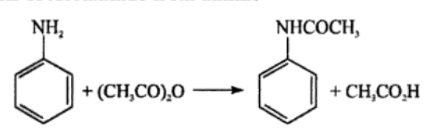
In a 100 ml round bottom flask fitted with a reflux condensor place 5ml of aniline and 10 ml of 1:1 acetic acid and acetic anhydride mixture (5ml acetic acid and 5 ml acetic anhydride). Heat the mixture gently under reflux for 15-20 minutes on oil bath and then pour the contents while still hot with stirring into a 200ml beaker containing 100ml ice cold water. Stir the mixture vigorously to hydrolyse the excess acetic anhydride. After all the acetanilide has precipitated, collct it on buchner funnel and wash with cold water. Recrystallise the crude product from boiling water. If the product is excessively coloured add a pinch of animal charcoal to hot water and filter hot through glass wool/ cotton plug. Pure colourless crystals of acetanilide melts at 114°C (5-5.5g).
World Health Organization (WHO)
Acetanilide, a para-aminophenol derivative with analgesic,
antipyretic and weak antiinflammatory activity, was introduced into medicine in
1886. It subsequently proved to be excessively myelosuppressive and has been
superseded by safer alternatives.
Purification Methods
Recrystallise acetanilide from water, aqueous EtOH, *benzene or toluene. [Beilstein 12 IV 373.]