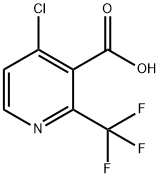
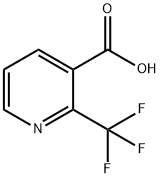
4-Chloro-2-(trifluoromethyl)nicotinic acid was synthesized as follows: n-butyllithium (66.2 mL of a 2.5 M hexane solution, 166 mmol) was slowly added to a stirred solution of anhydrous tetrahydrofuran (THF, 200 mL) of 2,2,6,6-tetramethylpiperidine (21.0 mL, 124 mmol) in a cryogenic bath at -78 °C. The reaction mixture was kept stirred at -78 °C for 30 min, followed by the addition of a THF (35 mL) solution of 2-trifluoromethylnicotinic acid (7.90 g, 41.4 mmol) via cannula. Stirring was continued at -78 °C for 20 min, then slowly warmed to -50 °C and maintained for 1 h to complete the lithiation reaction. In another reaction flask, hexachloroethane (29.4 g, 124 mmol) was dissolved in THF (200 mL), cooled to -15 °C and stirred rapidly. The above lithiated pyridine solution was transferred to the hexachloroethane solution via cannula. After the addition was complete, the reaction mixture was allowed to gradually come to room temperature. After addition of water (~200 mL), THF was removed by distillation under reduced pressure. the remaining aqueous phase was extracted with a solvent mixture of ether-pentane (1:1, 100 mL) and the organic layer was discarded. The aqueous layer was acidified with 1.0 M hydrochloric acid (~50 mL) to pH < 2 and subsequently extracted with ethyl acetate. The organic layers were combined, dried with anhydrous magnesium sulfate, filtered and concentrated under reduced pressure to give a brown solid product, 4-chloro-2-(trifluoromethyl)nicotinic acid, 8.75 g in 94% yield. The product was confirmed by 1H NMR (400 MHz, CD3OD): δ 8.63 (d, 1H), 7.79 (d, 1H). LC/MS analysis showed (M + 1) = 226.1. Ref: Schlosser et al., Eur. J. Org. Chem. 2003, 1559.